Did you know that work zone deaths have increased by 53% from 2010 to 2013? This alarming number grows with every passing year. A huge chunk of these fatalities is linked to construction vehicles. These large trucks are comparatively challenging to drive due to their sheer magnitude and size.
Hence, it is important to use safety solutions for construction vehicles. They upgrade the regular protection of a large vehicle. However, the bigger benefit is that they create a safer environment for labor. We have handpicked the best construction vehicle safety solutions and considerations. So, you don’t have to look elsewhere!
Safety Considerations for Construction Vehicles

Here are some key safety considerations for construction vehicles that can prevent work zone injuries and fatalities.
1. Pre-Operation Mirror Inspection
Blind spots are a huge problem in construction vehicles. They can obstruct the driver’s view, leading to devastating accidents. Side-view and rear-view mirrors can be handy against these blind spots. They can provide a good enough view for drivers to make informed decisions.
Thus, inspecting the mirrors before operations can be a lifesaver. Side and rear-view mirrors can accumulate dirt and moisture. It is better to clean them before you start driving. Another thing to look out for is their position. Reposition them according to your height to get a better view of your surroundings.
2. Use Spotters & Communication Tools
The large blind spots of a construction vehicle can make labor practically invisible to the driver. That leads to devastating workplace accidents. You can designate tools and protocols for communications to prevent such mishaps.
For instance, many companies use hand signals or two-way radios to guide these large vehicles. Alternatively, you can use a trained spotter to guide construction vehicles, especially in crowded areas.
3. Implement Blind Spot Decals
Blind spots are just as dangerous to the driver as to nearby workers. Drivers should use red tape and blind spot stickers to notify others. It can prevent manual workers from lingering too long in the vehicle’s blind spots. However, it is also important to train drivers to handle these no-zones better.
4. Use Advanced Solutions for Blind Spots
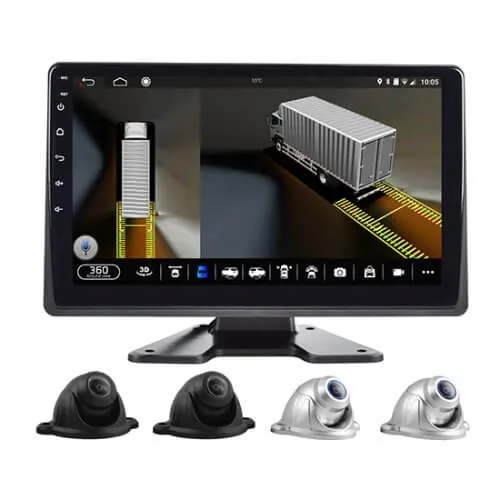
While side-view and rear-view mirrors are helpful, they don’t eliminate the blind spots. The only solution is to adopt an advanced driving assistant system. They significantly reduce the chances of workplace accidents and prevent disruptions, leading to higher efficiency.
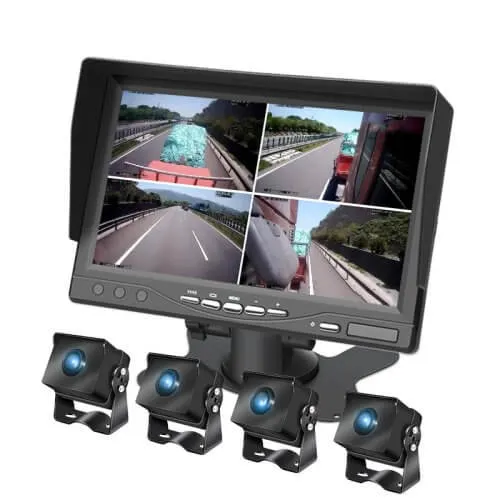
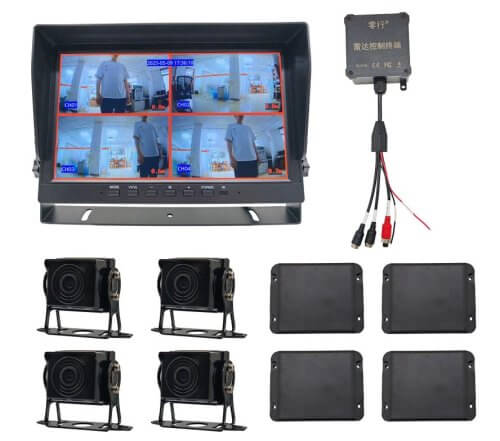
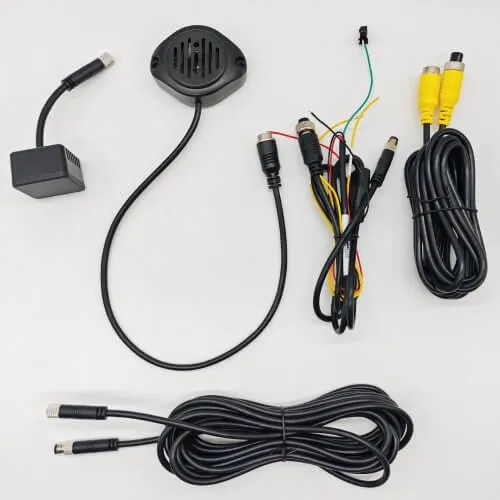
You can easily find camera and sensor-based safety solutions for construction vehicles in today’s market. They provide real-time vision and alerts to keep you updated on your surroundings. This way, you can always make informed decisions and avoid critical situations.
5 Best Safety Solutions for Construction Vehicles

The biggest safety concern for construction vehicles is their blind spots. However, we have gathered some effective solutions that can solve or, at the very least, minimize this problem and make it more manageable. So, let’s begin:
1. Blind Spot Mirrors
A blind spot mirror is one of the simplest and cheapest safety solutions for construction vehicles. It doesn’t require any technical experience from the driver. This specialized mirror can be mounted on your existing side-view or rear-view mirror. It uses a convex or concave lens to provide a broader view than traditional mirrors.
Blind spot mirrors don’t require any special components to install. Moreover, they are perfect for construction vehicle drivers who don’t prefer technical, advanced driving assistant systems.
However, there’s a catch. Blind spot mirrors are not the most effective for eliminating blind spots. Yes, they can provide a more detailed view of your surroundings, but some parts will still be obstructed. That could be due to the vehicle’s build, the driver’s height, or the mirror’s limited mobility.
2. Backup Alarm System
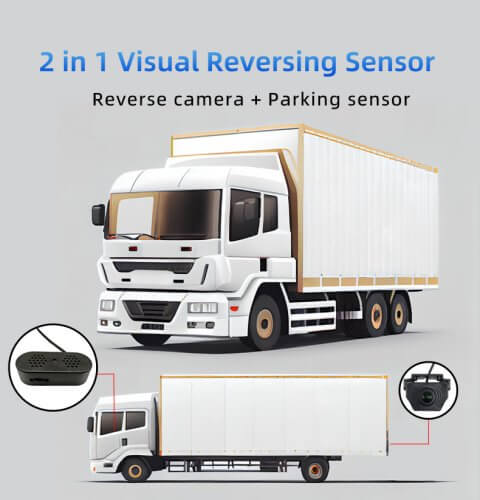
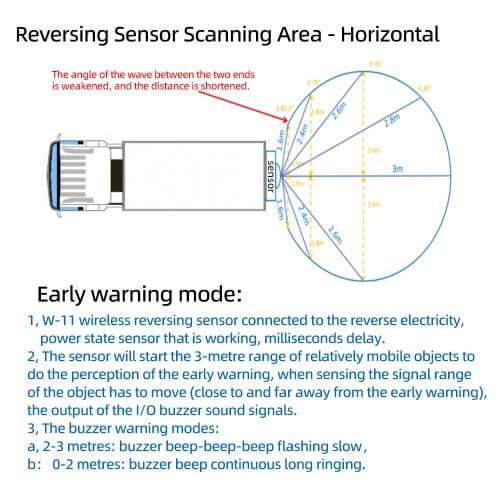
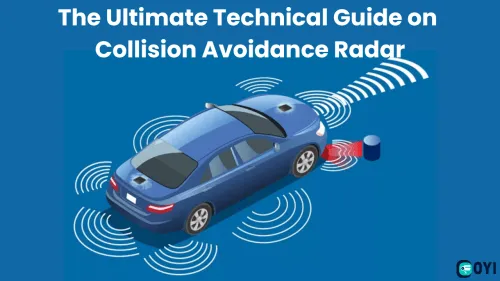
A backup alarm system is one of the beginner-friendly construction vehicles blind spot solutions. It uses a sensor that is mounted on the truck’s rear area, usually above the license plate. This sensor activates when the vehicle is in reverse or parking mode.
Backup alarm systems monitor the activity in the truck’s immediate rear blind spot. The sensor can detect objects, pedestrians, or other vehicles in the area. Then, it triggers an alert to notify the driver.
Usually, these systems use buzzer sounds with LED lights to alert the driver. How does the alarm help? It prompts the driver to double-check their rear blind spot via the rear-view mirror. So, the driver can stop reversing to avoid collisions.
While this system can make reversing and parking much easier, it still leaves the other three blind spots. Hence, it might not be the most effective as a stand-alone solution.
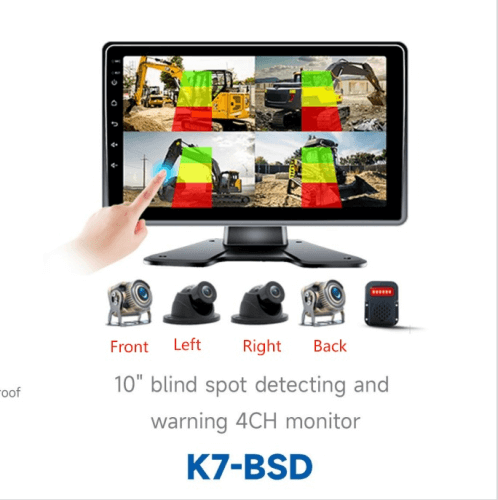
3. Blind Spot Monitoring System
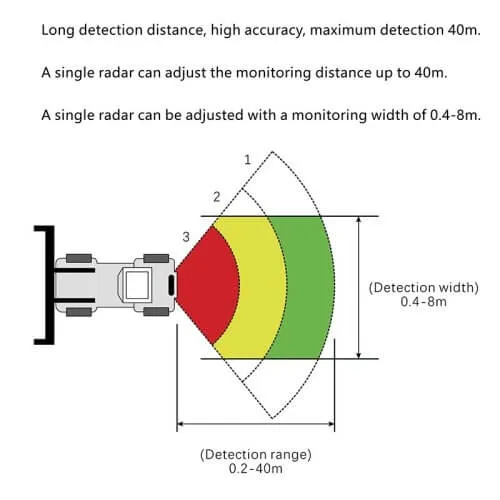
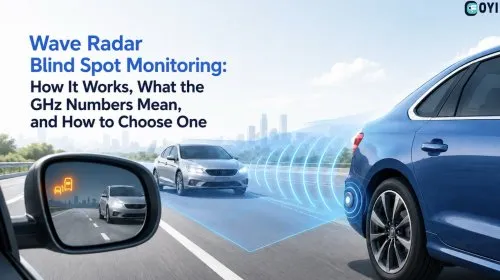
A blind spot monitor takes what backup alarm systems do and makes it significantly better. For starters, the sensors stay active throughout the journey, not just during specific movements. It also uses multiple sensors, up to 4, to monitor all four blind spots.
Additionally, BSM systems have customizable alert mechanisms. You can opt for LED lights, buzzers, or seat vibrations. BSMs provide real-time updates of your surroundings, notifying you of a threat in your blind spots.
A blind spot monitor is one of the most effective construction vehicle safety solutions. It has a decent area range of up to 9m. BSM systems are not just useful in crowded construction zones, but they are equally effective on roads. Hence, they can be an all-in-one solution for your construction vehicles.
4. Backup Camera System
A backup camera is pretty much the same as a backup alarm system, but with a few differences. Firstly, it uses lenses instead of sensors to monitor the rear blind spot. Backup cameras come with a display unit. Once on, the driver can view the real-time output on the screen.
Most backup camera systems provide guidelines during parking. These guidelines help prevent collisions with nearby stationary objects.
Like the sensors, these cameras also turn on when the construction vehicle is parking or reversing. They usually have supportive features like night vision and anti-glare to work in all lighting conditions. However, they require the driver to constantly monitor the situation on the screen. And like sensors, they only eliminate one blind spot, leaving the other three unattended.
5. Proximity Detection System
Proximity detection systems (PDS) are similar to blind spot monitors. They use multiple sensors to monitor all four blind spots. However, they can also take some active actions. For instance, PDS can trigger automated braking if a situation is too critical.
Proximity detection systems are useful for crowded spaces like construction zones. They can monitor stationary objects and workers. PDS also uses alert systems to notify the driver about a threat.
However, most proximity detectors have a smaller range than blind spot monitors. So, they are not as effective on the road. Additionally, some automated features can take away the driver’s control of the vehicle. Not to forget that these advanced functions also contribute to the system’s higher price.
3 Things to Consider When Buying Safety Solutions for Construction Vehicles

Safety solutions for construction vehicles can be excellent in creating a safer working environment. However, there are a few things to keep in mind. Let’s go through them:
1. Don’t Rely Entirely on These Systems
Yes, modern safety systems are very helpful and accurate. But that doesn’t mean a driver should rely on them entirely. Every now and then, a sensor can trigger false alarms. Similarly, a camera can run into some problems.
It is highly recommended to use these systems collaboratively with your safe driving practices. So, you can get the best outcome and prevent over-reliance.
2. Prefer Those with Simpler Installation
Installation can be a hassle. Online stores might not offer installation services, and locals will charge a fortune for the setup. Thus, buying systems with simpler installation is much better. You can go for DIY installation following the instruction manual.
If you are non-tech savvy, consider going for modern, wireless systems. Alternatively, technically experienced folks can easily handle wired solutions.
3. Regular Inspections & Maintenance
Regular care is essential for these systems. Some require less care than usual, but frequent inspections can save you hefty repair costs. Plus, maintenance is pretty simple with these systems.
For example, a construction vehicle’s camera solution will only require cleaning after 1-2 weeks. Similarly, wiping the sensor surface will maintain its accuracy for a long time. Blind spot mirrors also require regular cleaning with a soft cloth.
Conclusion
And that’s all you need to know about safety solutions for construction vehicles. These systems can make your work zone operations more efficient by avoiding accidents and disruptions. Moreover, they can create a safer workplace with minimal to zero chances of injuries and fatalities.
So, are you ready to buy a safety solution for your construction vehicle, but don’t know where to buy it from? Well, look no further than OYI Electronic. We have a wide range of camera and sensor-based systems— all with a 98% success rate, tested in competitive scenarios. The best part? Our pricing is as affordable as it gets. So, contact us today and get a free price quote for your desired safety solution!
Related Products: