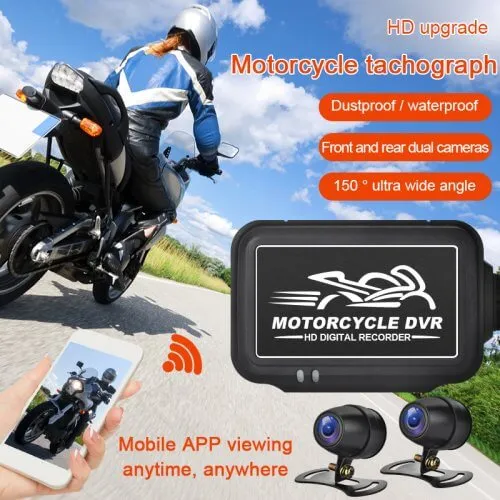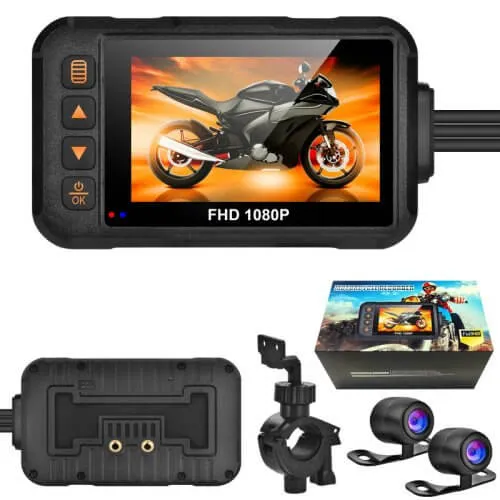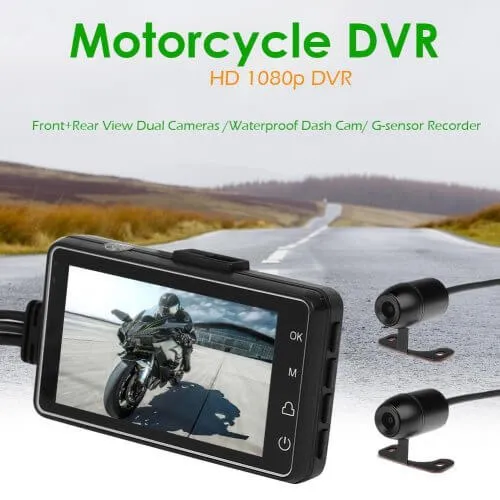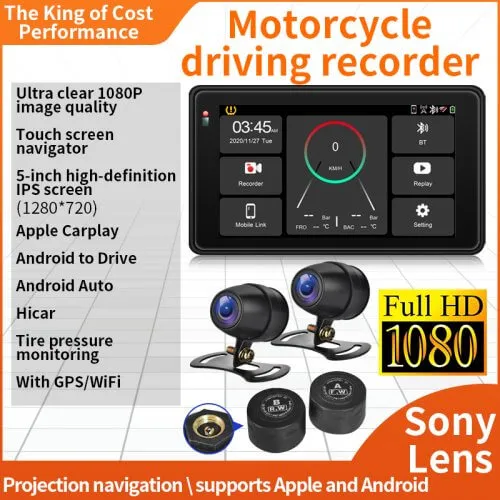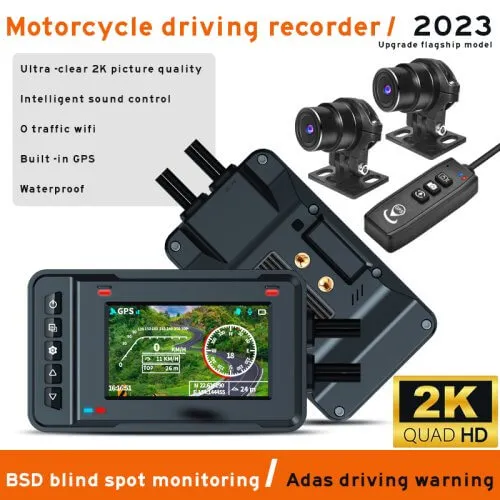
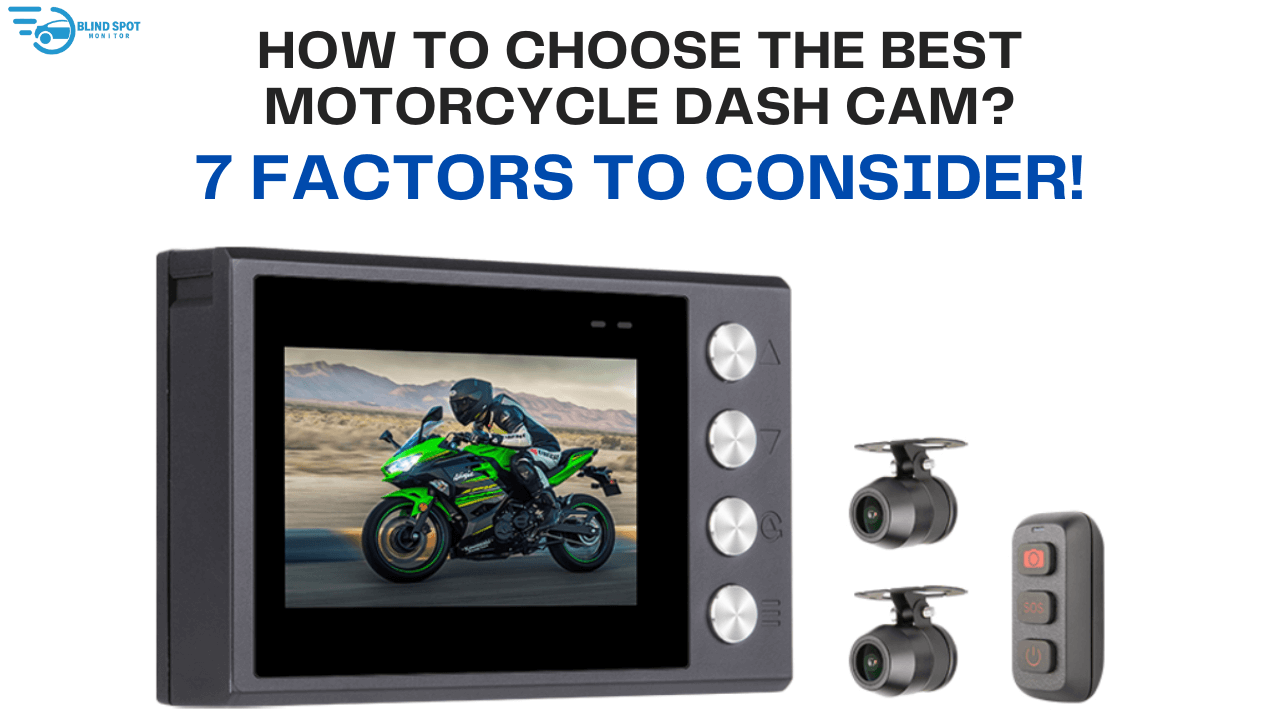
Motorcycle dash cameras come in different types, each having unique features. It can be a benefit for riders as they can pick the system that meets their requirements. However, it can also get confusing, especially for newbies. That’s because they would face difficulty in finding the best motorcycle dash cam.
But, the customer should ask this question from themselves. What makes the best motorcycle dash cam? Everyone would have different preferences and specific requirements. That is why we have summarized the process of buying the best one. How is that? Well, we have broken it down into important buying considerations. Hopefully, that will help you choose the right option. So, let’s get started!
Should You Buy a Motorcycle Dash Cam?
Many motorcyclists overlook the need for an advanced riding assistant. Since a bike has smaller blind spots, they are usually ignored. Another factor is that many motorcyclists are either recreational or casual riders. Hence, they don’t feel the need to add a safety feature to their motorcycle. However, that is not something you should opt for.
Motorcycle accidents have been increasing drastically under our noses. Over 6,200 motorcycle fatalities were observed in 2022. And that was a significant spike of 23% from 2019. The worst part? There has been an even a more huge increase in the number of crashes that might not have resulted in deaths and fatalities.
Let’s say you have been in a motorcycle accident. Although if it wasn’t that severe, the other party is now blaming you for the crash. Even worse, they are now bringing you into the court for legal proceedings. What proof would you have that you were not at fault? That is where the motorcycle dash camera can help you!

What Makes a Motorcycle Dash Cam Essential Today?
Yes, the number of motorcycle accidents has been increasing. However, you don’t have to worry about that. You can increase your bike’s safety and become a better rider with the best motorcycle dash cam. It has become an essential add-on for motorcycles, especially in today’s crowded traffic.
A motorcycle dash cam can help you in the following ways:
- Provide you with undisputed evidence of an accident in video and photo form that you can use in legal proceedings.
- Help you identify your mistakes, enabling you to learn and avoid those human errors in your next motorcycle journey.
- Assist you against a false insurance claim by providing detailed proof of a crash that shows you are not at fault.
- Lets you document your motorcycle journey throughout for future viewing and memory preservation.
- Supervise your company’s bike riders to track and record their rides for optimal route calculation.
Factors to Consider the Best Motorcycle Dash Cam
Are you ready to buy a motorcycle dash cam for your future rides? Well, there are a few things to consider. Some small considerations can help you pick the best motorcycle dash cam that suits all your needs. So, let’s discuss these factors and provide you with a clearer picture:

1. Cameras
Undoubtedly, cameras are the make-or-break components of a dash cam. They are the integral parts of the system to record the road footage. However, you should consider the following aspects of a camera when buying a dash cam:
Number Of Cameras
For motorcycles, you will find either one or two cameras in dash cams. Single-cam systems allow you to record only one area of the road, i.e., front or back. Alternatively, a dual-cam system records both areas of the road.
Camera Quality
Many people think that the video quality depends on the screen. However, that’s not the case. You can only view on the screen what your camera records. Hence, opt for lenses with or above 1080p video resolution. 2K and 4K cameras are highly recommended, but they can be quite expensive.
Camera Type
Some cameras are rotatable, meaning they can move around their positions. Such tools are called the motorcycle camera 360 systems. Alternatively, other cameras don’t move from their fixed angle.
2. Display Unit
Usually, dash cams come with a display unit: a small screen. You can mount it on the motorcycle’s handlebar for later or real-time viewing. However, many modern systems don’t have a screen. Rather, they connect to your mobile phone and use it as their display unit. That means you can download, share, or view the recordings on your mobile phone without needing an additional component.
3. Connectivity
And that brings us to another important factor. How does the dash cam connect to other devices? Generally, you have two common options:
- WiFi
- Bluetooth
Either way, you will need the respective mobile application of your dash cam. It helps you synchronize the system with your smartphone.
4. Waterproof Level
Having a waterproof system helps in many ways. It can help you record videos despite the weather conditions. Higher waterproof grades, like IP67, also resist outdoor elements. That includes the likes of dirt, dust, debris, and moisture. Hence, these systems are highly recommended for off-road and recreational motorcyclists. Alternatively, a casual or daily rider can get a system with an IP65 waterproof grade or higher.
5. Recording Features
The recording features may vary from system to system. However, there are some important ones you should consider. That includes:
Loop Recording
Loop recording must be at the top of your list of recording features. It helps you continue recording the footage without memory errors. In short, it provides convenience and saves you from the hassle of frequently clearing memory manually.
Time Lapse/Parking Monitor
Time-lapse or parking monitor helps you record extended videos when your vehicle is stationary. It can help you tackle issues like thefts when your motorcycle is parked in a remote place.
Camera Switch
If your system has two lenses, consider choosing a system with a camera switch feature. It enables you to switch between different perspectives of your two cameras. This way, you can record more detailed videos from different points of view.
6. Storage Capacity
Normally, you get three types of storage units in a motorcycle dash cam. Some people prefer one, while many people would choose the other options. That said, here are all of them:
Internal Storage
Internal or fixed storage was a popular choice in older dash cameras. It eliminates the need for external memory units. However, the fixed nature of this memory can be inconvenient and non-flexible for many people.
SD Cards
SD card is one of the most common memory options in dash cameras today. They can range anywhere between 16 GB to 256 GB, depending on the seller. The good thing with SD cards is that you can unplug them easily and insert them into other compatible devices. That makes this unit more accessible for memory management. Also, you can format or replace a card if it has become faulty.
Cloud Storage
A modern and emerging memory option is cloud storage. It is generally available in systems that support mobile application synchronization. Cloud is the most accessible option, allowing you to access it from anywhere with any device. The downside is that most systems that use cloud storage are comparatively more expensive.
7. Manufacturer
One of the most overlooked factors is unironically the most important one. Choosing an unreliable manufacturer can lead to problems like poor warranty, non-supportive customer service, additional costs for after-sales support, low-quality dash cams, etc.
That is why you should consider the following factors when choosing a manufacturer:
- Customer reviews and testimonials
- After-sales support
- Supportive warranty
- Price
- Installation guidance
- Success rate
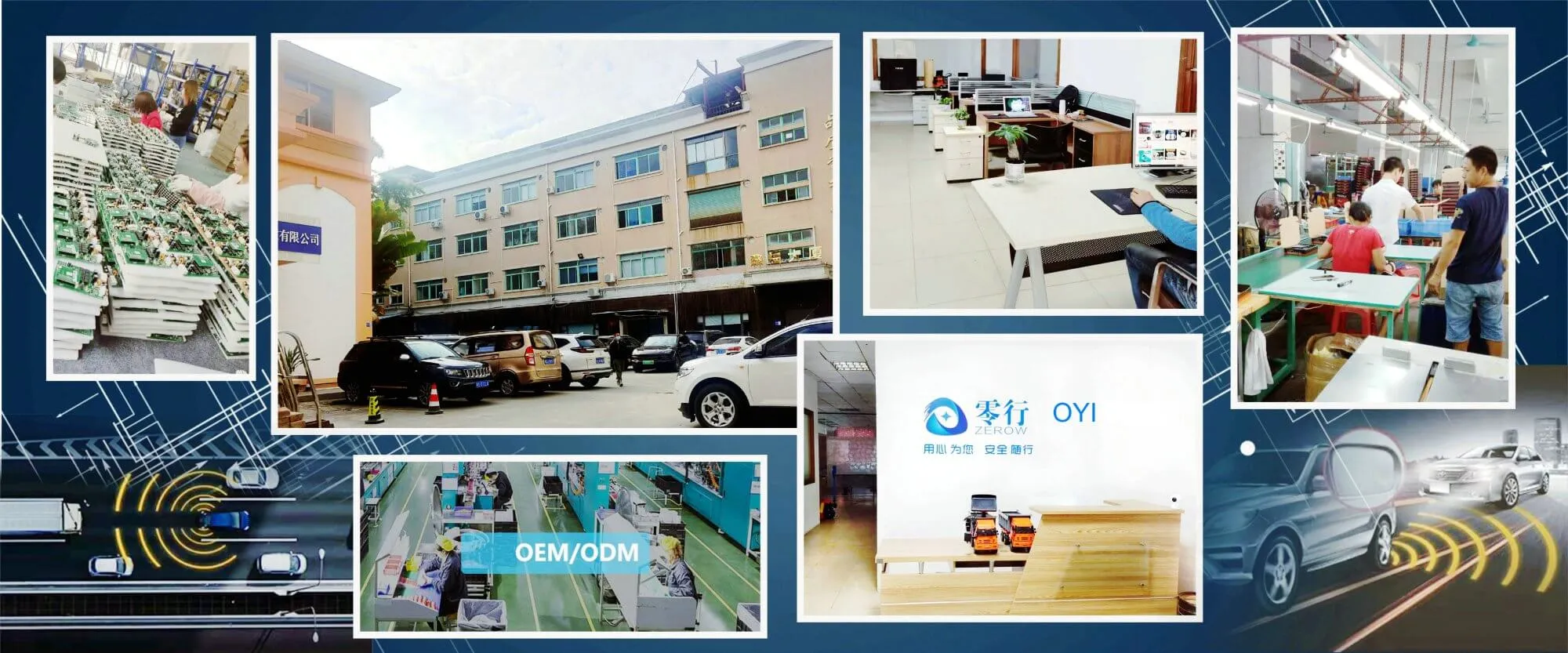
Luckily, you can find all these attributes in a single manufacturer, OYI Electronic. They sell high-quality systems with a 98% success rate, flexible warranty, excellent customer service, and after-sales support at factory prices.
3 Things to Avoid When Buying the Best Motorcycle Dash Cam
There are some don’ts when it comes to buying the best motorcycle dash cam. Here are three things to avoid:

1. Low Video Quality
You will find many cheap motorcycle dash cams. The downside is that they offer a video quality of 720p, 480p, or even lower. With these resolutions, you can not record detailed or clear road videos. This blurry footage will prove to be useless in situations like court proceedings.
2. Limited Memory
While internal memory systems may have been popular for a few years, they are becoming obsolete, and rightfully so! They require manual memory management regularly to record new footage. Additionally, you are bound to work with a fixed storage capacity, unlike an SD card.
3. Loose Mounting Brackets
One common issue that many people face is that their cameras reposition automatically. That happens if your mounting brackets are loose and affected by vibrations. Thus, consider buying a system with rigid mounting brackets that don’t come loose even in extreme rides.
Conclusion
The importance of buying the best motorcycle dash cam front and rear can not be overstated. This useful tool has many merits, making it a must-have in today’s traffic conditions. Even if you are not a regular motorcycle rider, it can come in handy. You can use it for tourism and recreational purposes. The system suits everyone ranging from daily commuters to bike club members.
However, buying the system doesn’t mean choosing any random seller. Consider a reliable manufacturer, like OYI Electronic. Only then, you can continue your motorcycle journeys with the much-needed peace of mind!
Related products: